
Best Custom Business Bag Styles for Business Events
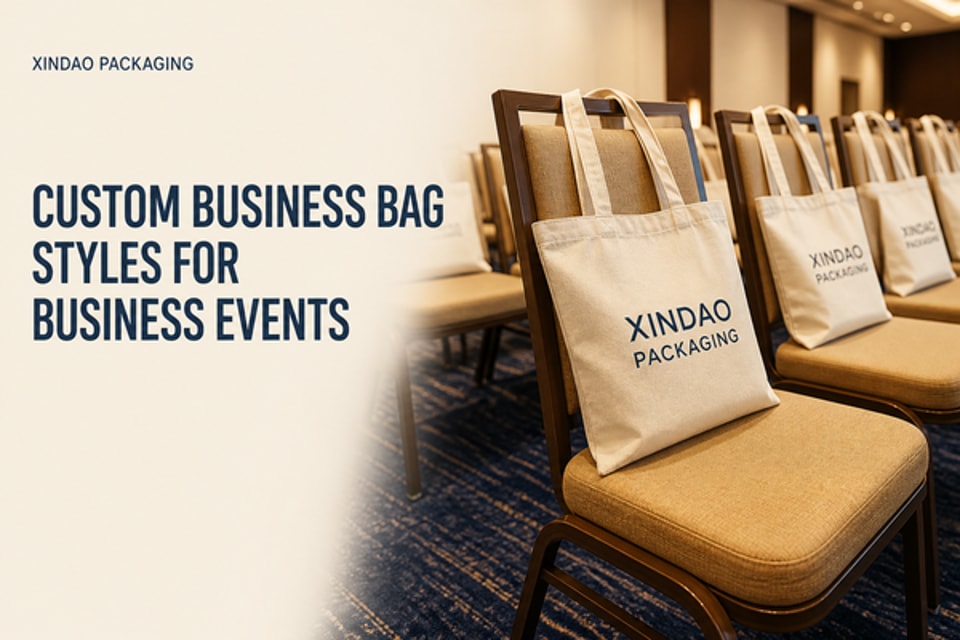
Introduction Business events create a short but important moment for your brand. Attendees arrive with limited carrying capacity. Then they collect schedules, samples, notebooks, and gifts. The bag you provide can make that experience easier. It can also remain useful after the event is over. The strongest custom business bags solve a real carrying problem before they display a logo. A bag that feels useful is more likely to leave the venue, enter daily routines, and keep your brand visible. A bag that feels awkward or weak may never make it past the hotel room. There is no single best format for every program. A trade-show attendee has different needs from a new hire, a visiting client, or a volunteer. This guide helps you select custom business bags by following the attendee journey, rather than choosing from a catalog first. Start With the Event Journey, Not the Bag Catalog Before choosing custom business bags, map what happens between check-in and the trip home. This approach makes the functional requirements much clearer. It also protects your budget from features that look attractive but do not help the recipient. Event moment Buyer question Bag requirement Arrival and registration What will attendees receive at check-in? Easy access, clear identity, and room for a schedule or welcome kit. Moving through the venue Will people walk, commute, or stand for long periods? Comfortable handles or hands-free carrying, with a manageable weight. Collecting materials Will they carry literature, samples, or personal items? Enough capacity, gusset depth, and dependable seams. Using it after the event What activity could make the bag useful again? A shape, material, and design that fit everyday routines. This model gives custom business bags four jobs: carry, move, display, and remain useful. A bag does not need to excel at every job. It needs to match the priorities of the specific event. A convention tote may carry catalogues well and create a broad logo panel. A laptop backpack may offer better comfort for a commuter. A drawstring bag may be easier to distribute in large numbers. The event journey tells you which trade-off is acceptable. When evaluating custom bags with logo for business, ask what the recipient will put inside first. Then consider how far they will carry it. Your brand treatment should follow those answers, not replace them. Five Custom Business Bag Styles and the Jobs They Do 1. Convention Tote for Literature and Samples Convention totes are among the most flexible custom business bags for trade shows, conferences, and open-house events. Their open top makes it easy to load brochures, sample packs, and giveaways. A generous front panel also gives a logo enough space to read in a busy venue. Choose a gusset when attendees will carry thick catalogues or boxed items. Check handle length before ordering. Short handles can be fine for light hand carry. Longer handles usually suit a full day on the shoulder. Reinforced handle attachment points matter when the event includes heavier materials. A convention tote is a practical choice when visibility and capacity matter more than security. It is less suitable for people who need to commute with electronics or keep contents enclosed. 2. Zippered or Structured Tote for Curated Kits Zippered and structured custom business bags work well for executive meetings, premium client programs, and curated welcome kits. The closure gives the contents a more controlled feel. A shaped base or reinforced panel can improve how the bag stands when filled. This style can carry notebooks, drinkware, small gifts, and event materials without looking like a simple handout. It is useful when the bag itself supports the perceived value of the program. Select the construction after confirming the kit contents and expected total weight. For custom bags with logo for business, a structured surface can help a clean wordmark look organized. A simple front placement often feels more considered than a crowded design. 3. Laptop Backpack for Onboarding and Technical Events Laptop backpacks are custom business bags for events where recipients need hands-free movement and daily use. They fit naturally into employee onboarding, sales meetings, technical conferences, and travel-focused programs. Their value comes from function, not just size. Look for a laptop compartment only when it matches the audience. A padded section adds utility for employees and presenters. It may be unnecessary for a short exhibition. Consider shoulder strap comfort, pocket layout, zipper quality, and the weight of the finished kit. A smaller decoration zone is common on backpacks. A compact logo, emblem, or short wordmark often works better than a wide campaign message. Embroidery may create a premium appearance on suitable materials. 4. Drawstring Bag for High-Volume, Active Programs Drawstring styles are efficient custom business bags for volunteer days, staff activities, charity runs, and community events. They pack flat, distribute quickly, and allow recipients to keep their hands free. Their simple shape also makes quantity planning easier. These bags are best for light items such as a T-shirt, water bottle, event guide, or snack. They are not the first choice for heavy printed materials. Reinforced corners and an added zipper pocket can raise their usefulness when the event requires more than basic carry. For custom bags with logo for business, the large flat front area can support a simple campaign graphic. Use high-contrast artwork and avoid too much small text because the bag moves and folds during use. 5. Foldable or Lightweight Reusable Bag for Retail and Travel Foldable options are custom business bags for retail activations, travel programs, hospitality events, and easy pack-away giveaways. Their key advantage is convenience. Recipients can store them in a suitcase, desk drawer, or car until they need extra carrying space. Choose this format when compact storage is part of the value proposition. It is less effective when you need a premium kit presentation or a bag that will hold a large stack of conference materials all day. Match Material and Construction to Real Event Use Materials affect weight, feel, print appearance, and long-term use. They should be selected after the style and event job are clear. Material direction Useful event role Construction points to check Light cotton Simple welcome bags and lighter handouts. Fabric weight, handle stitching, and print contrast. Heavier canvas Premium totes and material-heavy conferences. Gusset, reinforced handles, base support, and seam quality. Non-woven material High-volume distribution where low weight matters. Load limit, handle attachment, and logo readability. Recycled or RPET options Programs where recycled material is relevant. Available documentation, fabric feel, and intended reuse. Polyester or technical fabric Backpacks, drawstrings, and travel bags. Zippers, pocket layout, and decoration method. Custom business bags should be specified for the real carrying load. A bag that holds a brochure and pen needs less structure than one carrying samples, a laptop, and a water bottle. Gussets increase usable volume. Reinforced handles reduce stress at common failure points. Closures help protect curated contents during travel. If sustainability is important to your program, request the documentation you need before making a public claim. A durable bag matched to an everyday task can support longer service life. Design the Branding Zone Before Choosing the Decoration Method Artwork and bag shape must work together. The front panel may look large in a product image, but seams, pockets, zippers, and handle attachment points reduce usable decoration space. Review the print zone before approving a bag. Artwork type Bag or panel choice Likely route Buyer watch-out Simple logo or bold symbol Flat tote or drawstring front. Screen printing for qualifying larger runs. Keep line weights strong and colors distinct. Detailed multi-color artwork Smooth tote panel on suitable material. Digital or transfer-based option. Check small type and final artwork size. Premium compact emblem Backpack pocket or structured panel. Embroidery on suitable material. Simplify detail and confirm dimensions. Horizontal wordmark Wide tote panel or pocket panel. Depends on material and quantity. Avoid seams and curved areas. Custom business bags need a design that stays readable when carried. A centered logo is often effective, but not always. A wordmark may need a wider panel. Leave enough empty space around the design so it is not lost among folds and contents. Share vector artwork whenever possible. It helps the production team assess scale and edge clarity. If you have a raster file, send the highest-resolution version. Request a proof before production and check spelling, color direction, placement, and print size. The right approach for custom bags with logo for business depends on artwork, fabric, quantity, and intended finish. Ask for a recommendation after providing those inputs. Budget for Distribution, Not Just the Bag Price Bag price is one part of the event budget. The full distribution plan can include inserts, kit packing, venue delivery, temporary storage, staff allocation, and spare units. These details can change which custom business bags offer the best value. Start with expected attendance, then set an appropriate contingency. A large public activation may need more spare stock. A private executive session may work better with a smaller number of higher-value bags. Do not use total venue traffic as your only quantity estimate. Compare quotes with the same specifications. Confirm material, dimensions, gusset, print sides, decoration size, closure, packaging, production timing, and shipping terms. Custom business bags can look similar in a photograph while having different construction or scope. If timing is tight, separate production time from freight time. Confirm the in-hands date for the venue, not just the completion date at the factory. This matters when custom bags with logo for business must be packed with other event items. Three Event Scenarios and a Clear Bag Direction Trade Show With Literature and Product Samples Use gusseted custom business bags when attendees will collect paper materials, samples, and other exhibitors’ items. A convention tote with comfortable handles and a visible front panel supports this task. Choose a material weight that matches the likely load. New-Hire Summit or Executive Meeting Consider structured custom business bags for a welcome kit that includes a notebook, drinkware, technology accessories, or a laptop. A zippered tote can work for a compact kit. A backpack can work for a travel-heavy audience. Volunteer Day or Community Activation Choose drawstring or lightweight custom business bags when fast distribution and easy movement matter. Use a clear event mark and restrict the contents to light essentials. This can be the suitable option for a high-volume program. Across all three situations, ask what the recipient will carry and what they should do with the bag next. That question keeps custom bags with logo for business focused on a real experience. A Pre-Order Checklist for Xindao A clear brief helps Xindao recommend feasible custom business bags. It also makes quote comparisons faster and reduces late changes. State the fixed requirements first, then identify the details that can change. Event type, attendee profile, and expected carrying load. Target quantity, budget range, and number of spare units. Preferred bag style, material direction, dimensions, and construction details. Artwork files, desired logo position, print sides, and finish expectations. Event date, required in-hands date, and shipping destination. One feature that cannot change, plus two features that may be adjusted. Ask for a sample when construction, color, or logo detail is critical. Xindao can assess the custom business bags specification against the decoration route and production plan. How to Make a Shortlist Before Ordering Use a simple shortlist to compare custom business bags without losing sight of the event goal. Keep three candidates, then score each against the same criteria. First, test whether the custom business bags carry the planned kit comfortably. A visual mockup of the actual contents can reveal a capacity problem early. Second, check whether the custom business bags allow recipients to move naturally. Shoulder carry, hand carry, and hands-free options create different experiences. Third, review whether the custom business bags show the logo from a useful distance. A large print panel does not help when the design lacks contrast. Fourth, ask how the custom business bags will be reused after the event. A clear reuse situation can guide the material and construction choice. Fifth, compare custom business bags at the same specification. Changes in gusset, handle reinforcement, or closure can affect price and performance. Practical Review Points for Event Teams Event teams should inspect custom business bags as part of the full attendee kit. Place the planned items inside before approving a final style. Ask whether the custom business bags need an inner pocket for badges, travel documents, or small accessories. This feature should match a clear purpose. Check the handle attachment on custom business bags when the event kit includes heavier items. Handle strength is a practical quality point. Review the decoration area on custom business bags with the final artwork. Avoid approving placement from a generic mockup alone. Plan where staff will distribute custom business bags. A style that looks strong in a showroom can be slower to hand out at a busy registration desk. Confirm packing details for custom business bags before venue delivery. Flat packing, folded packing, and pre-filled kits require different handling. A small pilot of custom business bags can help verify attendee response. This is useful for a new event format or a redesigned brand system. How to Protect Brand Value After the Event The post-event life of custom business bags is part of the return on the program. Useful items can continue brand exposure outside the venue. Choose custom business bags with a design that fits ordinary settings. A restrained mark may receive more repeat use than a date-heavy event graphic. Keep color choices practical for custom business bags. Neutral shades can suit repeated use, while brand colors can work when visibility is the top goal. Store the approved artwork and specification for future custom business bags orders. This protects consistency when the program repeats in another market. When demand is proven, custom business bags can evolve with better materials or finishing details. A repeat program provides clearer evidence for that investment. The right custom business bags are not defined by one trend. They are defined by fit between the event, the recipient, and the intended next use. A final custom business bags selection should be tested against the real schedule, load, and distribution plan. This keeps operational details visible before production begins. When you compare custom business bags, focus on the recipient’s experience rather than the longest feature list. The result is often a clearer, more useful specification. For repeat events, custom business bags can become a recognizable part of the attendee experience. Record what worked, then refine the next order with evidence. Custom business bags create stronger brand contact when recipients choose to use them again. That outcome begins with practical event planning. Final Selection Check Before Production Confirm the custom business bags fit the actual materials your attendees will receive at registration. Check whether the custom business bags remain comfortable after a full day of walking and networking. Review a filled sample of the custom business bags before approving final packing details. Make sure the custom business bags give the brand mark enough contrast against the chosen fabric color. Use the event run sheet to decide where custom business bags will be stored and handed out. Confirm the custom business bags count after allowing for speakers, staff, and reasonable spare stock. Approve the final artwork scale on custom business bags rather than relying on an unmeasured digital mockup. Choose the custom business bags closure based on what recipients must protect during travel. Consider whether custom business bags need a name card, care insert, or event guide inside. Ask the production team to confirm the custom business bags construction against the expected item weight. For a recurring program, retain the approved custom business bags specification for future regional events. Use attendee feedback to improve the next custom business bags order instead of adding features by assumption. A focused custom business bags brief helps maintain brand consistency across bags, inserts, and event signage. The right custom business bags selection supports both event operations and continued use after the venue closes. Conclusion The best custom business bags are selected for what attendees need to do. A tote, backpack, drawstring, or foldable bag can all work when it supports the event journey. Start with carry requirements, then choose construction, branding, and quantity. This creates a useful event item and a more credible brand touchpoint. Frequently Asked Questions Which custom business bags work best for trade shows? For most trade shows, custom business bags need enough capacity for literature, samples, and personal items. A gusseted convention tote is often practical because it combines an open loading area with a visible front panel. Choose handle length, material weight, and reinforcement based on the expected carrying load. If attendees must commute with electronics, a backpack or zippered tote may be a better fit. How should I choose custom bags with logo for business events? Start with the event journey. Identify what attendees receive, what they will carry, how they will move, and whether the bag has a useful life after the event. Then select the style, material, and construction. For custom bags with logo for business, review the usable decoration area before choosing the print method. This keeps the logo visible without sacrificing function. What should I send for a custom business bags quote? Send the event type, quantity, budget range, bag style, material, dimensions, construction details, artwork, print placement, deadline, and shipping destination. Include the expected carrying load and any kit contents. These details allow Xindao to review custom business bags as a complete project. Clear inputs lead to a more accurate recommendation, proof, and production plan.
Can You Order a Custom Canvas Tote With a Low Minimum?
The Short Answer Yes, you can often order a custom canvas tote with a low minimum. The workable quantity depends on what you want to change. A standard bag with a flexible print method can start very low. A bag with new dimensions, dyed fabric, pockets, labels, or special packaging usually needs more units. This difference matters because “no minimum” can sound broader than it is. It may describe a stocked blank bag with one decoration method. It does not always cover a fully engineered product. Before you compare quotes, separate the bag itself from the decoration added to it. A custom canvas tote can be a sensible first step for a new retail idea, a small event, a staff gift, or a design test. The goal is not simply to find the lowest stated minimum. The goal is to choose the lowest-risk route that still meets your quality, budget, and delivery needs. Why “No Minimum” Can Mean Three Different Things A low order quantity can refer to three very different purchasing paths. Knowing the path helps you avoid a quote that looks affordable but cannot deliver the bag you imagined. Order path What stays standard What can change Best fit One-off or sample A stocked tote, common fabric, and existing construction. Artwork and selected print area. Testing a design, approving placement, or creating one gift. Small decorated run A stocked tote style and available color. Artwork, print method, and order quantity. Small events, limited retail drops, or internal programs. Factory-built bag The production plan is created for your project. Size, fabric, color, gusset, handles, pockets, labels, packaging, and print. Established programs that need a distinctive bag specification. The first path can make a custom canvas tote possible at a very low quantity. The second path balances flexibility and usable inventory. The third path gives the broadest creative control, but it normally creates more material and production commitments. For many first orders, a stock bag with decoration is the most practical choice. It lets you test artwork, gauge demand, and collect feedback. You can then move to deeper bag customization when the design and forecast are clearer. What Raises the Minimum Order Quantity? MOQ is not a single factory rule. It is the result of the work needed to make your requested product. The more steps that must be prepared only for your order, the more pressure there is on the minimum quantity. Customization element MOQ pressure Why it changes the production plan Simple artwork on a stock natural tote Lower The bag already exists and the decoration may use a flexible workflow. Full-color artwork or special placement Moderate The print route, alignment, and production time need review. Custom fabric color or fabric weight Higher Fabric sourcing or dyeing can require dedicated material quantities. New dimensions, gusset, or handles Higher The cutting and sewing plan changes from the stocked pattern. Pockets, zippers, labels, or retail packaging Higher Each added component creates purchasing and assembly work. Screen count, stitch count, and artwork detail can also affect the answer. A one-color logo may suit one process. A photo-style design may need another. Ask for a recommendation based on the actual artwork instead of choosing a process only by its name. When your goal is a low-minimum custom canvas tote, reduce variables first. Use an available bag color. Choose a standard size. Keep the finishing simple. These choices preserve budget for the part buyers will notice most: the artwork and the bag’s usefulness. Choose the Lowest-Minimum Route That Fits Your Artwork The print method should follow the artwork, bag material, and order size. It should not follow a generic promise. Different methods create different setup demands and visual results. Artwork or project need Practical route Xindao stated starting quantity Buyer consideration Detailed design, test order, or one piece Digital printing 1 piece Confirm the selected bag and artwork are suitable before ordering. Small qualifying run with transferred artwork Heat transfer or sublimation 50 pieces Review fabric compatibility and desired finish. Textured, premium logo Embroidery 300 pieces Stitching works best with simplified artwork and suitable placement. Bold graphic for a larger program Screen printing 500 pieces The setup suits larger runs and simpler color plans. These are Xindao-specific starting quantities, not universal industry rules. A custom canvas tote still needs a review of fabric, placement, and artwork. The most efficient choice can change when you add a zipper, use a dark bag, or request multiple print locations. Digital printing is useful when you need detail and low commitment. Heat transfer or sublimation can serve qualifying small runs. Embroidery adds texture and a premium feel. Screen printing can make sense when the graphic is simple and volume can support the setup. Buyers of custom print bags should send the artwork early. A clear file lets the supplier check small details, color treatment, and printable area. This avoids selecting a low-MOQ route that cannot reproduce the design as intended. Low Quantity Reduces Commitment, Not Always Cost A low minimum reduces inventory risk. It does not always create the lowest price per bag. Small orders can carry more preparation time per piece. Artwork handling, machine setup, inspection, and packing still happen even when the order is small. For a new brand, the right comparison is often the total test budget. A small run may cost more per unit, yet save money by preventing a large order with the wrong color, print size, or bag shape. That is a useful trade when you are learning what customers want. Compare custom print bags using the same specification. Check fabric weight, dimensions, gusset, print sides, color count, decoration method, packaging, production time, and shipping. A lower unit price can hide a different bag or a less complete service. If your budget is tight, provide two acceptable quantities. For example, ask for a low test quantity and a second price at a higher quantity. This shows how the unit cost changes without forcing an early commitment. Should You Order a Sample or a Small Run? Order a sample when the physical details are still uncertain. This is especially important when you need exact print placement, a new fabric weight, a color match, a specific handle length, or a retail presentation. A sample makes it easier to correct details before more bags are made. Choose a small run when the tote style is already proven, the artwork is final, and you need usable items for a real campaign. A custom canvas tote order at this stage can support a launch, a pop-up event, a school program, or a staff welcome kit. Before requesting either option, prepare a short brief: Intended use and who will receive the bags. Target quantity and a second acceptable quantity. Bag size, fabric weight, bag color, and gusset requirement. Artwork file, print sides, approximate print size, and preferred method if known. Handles, pockets, zipper, labels, packaging, and required delivery date. Destination country or city for shipping planning. This brief helps Xindao recommend the custom canvas tote route that is genuinely workable. It also reduces back-and-forth before artwork review and quotation. How to Request a Practical Low-Minimum Quote From Xindao A useful low-minimum quote begins with clear priorities. Tell Xindao which elements are fixed and which can change. For example, your logo may be fixed, while the bag color or quantity range may be flexible. That information gives the team room to recommend a more efficient option. Send your intended use, target quantity, bag dimensions, fabric preference, bag color, artwork, print position, finishing needs, target date, and destination. If you have a reference image, identify which details matter most. A visual can show style, but it may not show fabric weight or construction requirements. For custom print bags, ask for the recommended process rather than demanding one process first. Xindao can then compare the artwork with its available methods and confirm the practical MOQ. This creates a more reliable starting point than a broad “no minimum” request. You can also ask for two routes: one using a standard stock tote and one using a more customized specification. The comparison makes the trade-off clear. You will see what additional design freedom costs in quantity, timing, and budget. A Low-Minimum Decision Checklist Start by defining the job the custom canvas tote must perform. A conference giveaway needs different capacity from a boutique purchase bag. Choose the custom canvas tote size around what recipients will carry. Books, groceries, samples, and apparel need different gusset depth. Keep the custom canvas tote color standard when quantity is limited. Stock shades often protect both timing and budget. Use the custom canvas tote fabric weight to match the expected load. A light event bag does not need heavy utility construction. Confirm whether one-side or two-side decoration matters for your custom canvas tote. Each print location affects preparation and pricing. Ask whether the custom canvas tote needs inside features before requesting a low number. Pockets and zippers can change production feasibility. Give the supplier a real delivery date for your custom canvas tote. Production time and shipping time require separate planning. Do not treat a low-minimum custom canvas tote as a shortcut around artwork approval. A proof still protects the final result. Protecting a Small-Order Budget A simple custom canvas tote can create useful market feedback without excess inventory. Treat the first run as evidence, not only merchandise. Use the custom canvas tote sample to inspect fabric feel and print placement. Photos cannot always show construction quality. If recipients will reuse the custom canvas tote often, prioritize handles and seams. These details shape the long-term brand impression. A custom canvas tote ordered for retail needs a different review from event swag. Consider presentation, durability, and repeat demand. Low quantities of custom print bags can support creator launches and local events. They also help teams test several messages. Do not add every feature to the first custom canvas tote run. Keep the test focused on the attributes that influence purchase decisions. From First Run to Repeat Program Record feedback after the custom canvas tote reaches users. Note capacity, comfort, print clarity, and perceived value. Use that feedback to refine the next custom canvas tote specification. A repeat order can justify more tailored construction. When demand is proven, a custom canvas tote program can explore woven labels or retail packaging. Those features make more sense at planned volume. Keep artwork files organized for future custom print bags. Consistent source files speed review and help retain brand accuracy. The best custom canvas tote order is not always the smallest possible order. It is the order that proves the next decision. Send a complete brief before selecting your custom canvas tote process. Clear inputs help Xindao recommend a feasible route. A low-minimum custom canvas tote is most successful when specifications stay clear. Flexibility in nonessential details often creates better options. A Practical Plan for Your First Order Define one non-negotiable goal for the custom canvas tote before reviewing options. It may be a launch date, print quality, capacity, or price ceiling. Choose a custom canvas tote that supports the intended use. A bag that fits the user’s routine is more likely to carry your message again. Keep the first custom canvas tote specification easy to quote. Standard fabric and dimensions make the supplier recommendation more reliable. Review a visual proof for every custom canvas tote order. Check logo scale, placement, contrast, and the safe distance from seams. Confirm production timing for the custom canvas tote after the specification is approved. Do not count shipping inside the production estimate. Use a sample custom canvas tote when a physical detail matters more than speed. It is the clearest way to review touch, shape, and print result. A small custom canvas tote run is useful when the product is already familiar. It gives you real inventory without a large commitment. Ask what changes would make the custom canvas tote more feasible at your target quantity. A small adjustment can open a better production route. Treat each custom canvas tote quote as a defined specification. This makes it easier to compare alternatives fairly. Plan the next custom canvas tote order from real use data. Feedback can show whether the bag needs stronger handles, more space, or a different finish. A well-scoped custom canvas tote project creates clearer decisions for both buyer and supplier. That is the strongest basis for a low-minimum order. Conclusion You can order a custom canvas tote with a low minimum when the request matches a suitable bag and decoration route. Start with the outcome you need, not a broad MOQ promise. A simple stock tote and a flexible print method can help you test demand. Deeper product customization becomes more practical when your quantity and specification are ready for it. Frequently Asked Questions Can I order one custom canvas tote? Yes, Xindao’s stated starting quantity for digital printing is one piece. This can suit a sample, a design test, or a one-off gift. We can also provide sample service for other printing methods, but please note that there will be sample fees. Why does the MOQ change by printing method? Each method uses a different workflow. Digital printing can support very low quantities. Xindao states starting quantities of 50 for heat transfer or sublimation, 300 for embroidery, and 500 for screen printing. These thresholds reflect Xindao’s available options. The fabric, artwork, and bag specification can still affect feasibility for custom print bags. What details should I send to receive a low-minimum quote? Send the quantity, intended use, bag dimensions, fabric, color, artwork, print sides, finishing details, deadline, and shipping destination. Include a second acceptable quantity if possible. This lets Xindao match your custom canvas tote request to a practical decoration route. It also helps prevent a quote based on assumptions that do not match your final product.
Digital Printing vs Screen Printing Tote Bags: Which One Wins?
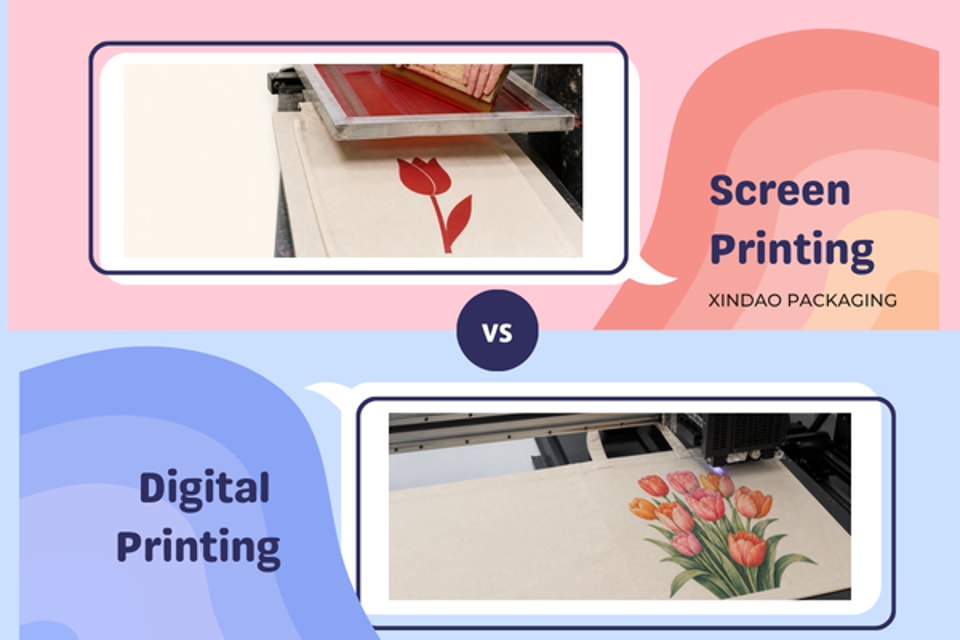
Choose the Process After You Define the Project A good canvas bag needs more than a strong fabric and a useful shape. It also needs the right decoration method. Buyers often compare screen printing tote bags with digital printing because both can create effective branding. The better choice depends on the order, not on a simple rule. Start with the artwork, quantity, bag color, print area, budget, and delivery plan. A bold one-color logo may suit one process. A detailed illustration with many colors may need another. The same design can also need a different method when the order quantity changes. This guide gives you a clear way to compare screen printing tote bags and digital printing. It focuses on the details that affect a real quotation. It also helps you print tote bags with fewer surprises before mass production. Start With Five Questions, Not a Printing Method Do not choose a method from a product photo. Ask five simple questions first. The answers will help you decide whether screen printing tote bags or digital printing deserve a closer look. Is the Artwork Simple or Highly Detailed? Look at the design before you look at the process. A simple logo, bold type, line art, or large solid shape may work well with screen printing. Each color can stay clear and strong on the canvas surface. A photograph, watercolor image, detailed illustration, or design with smooth gradients may suit digital printing. This process can reproduce more visual detail from the artwork file. It gives designers more freedom when the image has many tones. How Many Colors Need Faithful Reproduction? Color count affects setup and cost for screen printing tote bags. Each screen color usually needs its own preparation. A limited palette can make the process more efficient. A complex multi-color design can add more production steps. Digital printing works from a prepared file. It can be useful when the artwork includes many colors, shadows, or small visual changes. Still, you should confirm the expected color result on the chosen fabric. Canvas color and texture can change how art appears. Is This a Short Run or a Repeat Bulk Order? Order quantity matters. Screen printing tote bags may become more practical when many bags use the same simple artwork. The setup work can spread across a larger run. This can improve the cost structure for repeat orders. Digital printing can be useful for short runs, samples, several small design versions, or projects that change often. It avoids per-color screen preparation. The final decision should come from an order-specific quote. How Will the Bag Be Used and Handled? Think about the bag after it leaves the factory. Will it carry groceries, books, event materials, or premium retail products? Will users fold it often? Will it face regular friction or washing? Screen printing tote bags can create bold ink coverage and a noticeable surface feel. Digital printing can provide detailed artwork and a different surface effect. The intended use should guide the process, fabric, and print area together. Is the Deadline Fixed? A fixed event date changes the planning process. Screen preparation, proof approval, curing, and production scheduling need time. Digital printing also needs approved artwork, file preparation, and production capacity. Send your artwork early. Confirm the bag material, color, print sides, and packing requirements. A clear brief helps Xindao Packaging recommend how to print tote bags on a realistic schedule. How Screen Printing Tote Bags Are Produced Screen printing uses a mesh screen to place ink onto the fabric. Each color in the artwork usually needs a separate screen. The production team prepares the screens, places the bag, applies the ink, and cures the print before packing. This process often suits logos with limited colors, bold letters, simple shapes, and repeated artwork. Screen printing tote bags can show strong color blocks and clear edges. The finished print may also have a more tactile surface than a digital design. Preparation is important. The artwork needs clean color separations. The print location must avoid seams, handles, hems, and gussets. The team also needs to check the canvas surface, ink choice, and curing conditions. For a repeat campaign, screen printing can support consistent branding across a planned bulk run. It is not automatically the right choice for every large order. A detailed multi-color design can make the setup more complex. Review the artwork and quote before you decide. How Digital Printing Works on Canvas Bags Digital printing starts with a prepared digital artwork file. The printer applies the image to the bag using a suitable ink system and workflow. It does not need a separate screen for every color in the design. This method can work well for photographs, gradients, detailed illustrations, and artwork with many colors. It can also support a project with several design versions. A brand may use this flexibility for an art collection, small event run, or sample review. Digital printing still needs careful preparation. The fabric weave, bag color, surface texture, artwork resolution, and print area all affect the result. A detailed file cannot solve a fabric or placement issue on its own. Before you print tote bags, provide the original artwork file and the expected print size. A high-resolution image or suitable vector file helps the supplier assess the design. A proof or sample can confirm the look before bulk production. Compare the Methods by the Conditions That Change Your Quote The table below focuses on the practical questions that affect a canvas bag order. Use it to compare screen printing tote bags and digital printing before you request a final quotation. Buyer Decision Factor Screen Printing Digital Printing What to Confirm Before Quoting Artwork Often suits bold, limited-color graphics. Often suits gradients, photos, and detailed artwork. Send the original artwork, not a screenshot. Quantity Setup may suit repeat bulk runs. Often flexible for short runs and design variations. State quantity per design, not only total quantity. Color handling Each color can add a setup step. Many colors can come from the prepared file. Provide color reference and fabric color. Finish and feel Can create a tactile ink layer. Can give a smoother visual effect, depending on the process. Describe the finish you want. Canvas surface Texture and color can affect coverage. Fabric preparation and ink compatibility affect output. Confirm canvas composition, weight, weave, and bag color. Schedule Screen preparation and curing need planning. File readiness and printer workflow need planning. Confirm artwork approval, sample needs, and production window. For screen printing tote bags, the artwork and quantity often shape the quote together. A simple two-color logo may have a different cost structure from a six-color design. A larger order can distribute setup work across more bags. That does not mean every high-volume project should use screen printing. For digital printing, the design can carry many colors without separate screens. However, the final quote still depends on bag material, print size, artwork coverage, and production requirements. Ask for a recommendation based on your actual project. The Cost-Crossing Point: Why Quantity Alone Is Not Enough Buyers often ask when screen printing becomes cheaper than digital printing. There is no single answer that fits every order. The cost-crossing point changes with the artwork, bag, and production plan. Screen printing tote bags often include setup work before the main run. This work may include screen preparation, color separation, ink setup, and process checks. Once the setup is ready, repeated printing can become more efficient for a stable design. Digital printing may have a different cost pattern. It can reduce the need for per-color screen setup. This can help when the run is short or when every design version changes. Yet a large print area or detailed coverage can still affect cost. Check three factors before you compare prices. First, count the colors or artwork complexity. Second, confirm the size and coverage of the print. Third, ask whether the artwork will repeat in future orders. These details give you a more accurate basis for screen printing tote bags. Do not use a generic online quantity threshold as a final decision. Request two quote options when both methods are possible. Compare total cost, sample result, lead time, and expected finish. This gives a more useful answer than comparing unit price alone. Match the Artwork to the Process Before You Print Tote Bags The best print result starts before production. Review the artwork in the context of the bag. Think about its colors, fine lines, placement, and intended viewing distance. This step can prevent a weak result for screen printing tote bags or digital printing. Keep a Simple Brand Logo Clear for Screen Printing A simple logo can work well for screen printing. Use clean shapes, readable text, and solid color areas. Keep fine details large enough to remain clear on the canvas weave. A bold design can help screen printing tote bags look consistent across a bulk run. If the logo uses brand colors, provide a clear color reference. Do not rely on a screen image alone. The bag fabric and ink system can change the visual result. A proof helps confirm the expected look. Retain Gradients, Photos, and Fine Art Detail for Digital Printing Digital printing can be a strong option when the artwork has many colors, tonal changes, or photographic details. It can help preserve the character of an illustration without simplifying it into separate flat colors. Check the artwork at the actual print size. A very small image may lose detail even with digital printing. A high-resolution original file gives the supplier a better basis to print tote bags with clear edges and balanced color. Review Thin Lines, Small Text, and Large Solid Blocks Thin lines and small text can be difficult on textured canvas. Large solid areas can also behave differently across the fabric surface. These issues are not limited to one method. They need review before you approve a proof. For screen printing tote bags, ask whether small elements need thicker lines or more spacing. For digital printing, check whether detailed elements remain clear at the final print size. Small artwork changes can improve readability without changing the design idea. Confirm the Print Area and Seam Clearance The outer size of a tote is not the same as the usable print area. Leave safe space around side seams, top hems, handles, and gussets. This protects important artwork from distortion or incomplete coverage. Send the desired print location with your file. State whether you need front-only, back-only, or two-sided printing. This helps the supplier plan screen printing tote bags and digital projects with the right placement and workflow. Five Print Risks to Check Before Mass Production A good quote is important. A strong approval process is equally important. Check these five risks before bulk production of screen printing tote bags or digital prints. 1. Artwork Changes After Proof Approval Last-minute changes can affect screens, files, scheduling, and cost. Finalize the logo, text, colors, and print size before approval. If a revision is necessary, ask how it changes the production plan. 2. Color Expectations Without a Reference A logo can look different on a monitor, paper proof, and natural canvas bag. Supply Pantone information or an approved physical reference when color accuracy is important. This step helps screen printing tote bags meet a clearer standard. 3. Dark or Textured Canvas Dark fabric can need a different approach from natural or white canvas. Texture can also affect edge clarity and coverage. Tell the supplier the bag color, fabric composition, weight, and weave before a method is selected. 4. Oversized Art Near Seams, Handles, or Gussets A large design can look strong on a flat layout. It may fail if it runs too close to a seam or gusset. Keep key text and graphics inside a safe print zone. This reduces placement risk when you print tote bags in bulk. 5. A Sample That Does Not Match the Bulk Specification A sample should use the approved fabric, bag color, artwork, print size, and process whenever possible. A sample made with different conditions may not predict the final result. Confirm what the sample represents before you approve it. Use a simple approval checklist. Review the bag construction, fabric color, logo placement, print scale, text readability, color reference, and surface feel. This helps protect the result for screen printing tote bags and digital orders. Which Method Fits These Four Canvas Bag Projects? The following scenarios show how project conditions guide the decision. They are examples, not fixed rules. Xindao Packaging should review each order before production. A Repeat Corporate Logo for a High-Volume Event A bold logo with one or two colors can be a good candidate for screen printing tote bags. The design is simple, the artwork repeats, and the order may have enough volume to make setup practical. Confirm the fabric, print size, and final event date before booking production. A Full-Color Artist Collaboration A canvas bag with detailed illustration, gradients, and many colors may suit digital printing. The method can preserve more visual detail from the original file. Review the art at the final print size and request a proof or sample. Several Campaign Designs in Limited Quantities A brand may launch several graphics for one event or retail test. Digital printing can offer useful flexibility when each version has a limited quantity. Share the number of designs and quantity for each one when you ask for a quote. A Two-Sided Sponsor Bag With Limited Colors Both methods may be possible. The best choice depends on the total quantity, number of colors on each side, print area, and repeat use. Ask for two options if the project allows it. This lets you compare screen printing tote bags and digital printing on the same specifications. Request a Method Recommendation From Xindao Packaging Xindao Packaging can help you select a canvas bag printing method based on the real order conditions. Send your bag fabric and color, quantity per design, original artwork file, print locations, desired print size, packing requirements, sample need, and target delivery date. Our team can review whether screen printing tote bags or digital printing better suits your artwork and order plan. A clear brief helps us recommend a practical process, prepare an accurate quote, and plan the right proof or sample. A Simple Final Review Before You Choose Review the artwork, quantity, and deadline together. This helps you compare screen printing tote bags with digital printing on the same basis. A clear comparison protects the visual result and the budget. Ask whether your logo needs flat colors or fine tonal detail. This question can narrow the choice for screen printing tote bags. It also helps the production team prepare the right proof. Review the bag material before approval. Natural canvas, dyed canvas, and textured fabric can change the result. Share this information when you request screen printing tote bags. Use a sample to inspect the scale of the logo. It helps you check placement, coverage, and the feel of the ink. A sample is useful for screen printing tote bags with important brand colors. Confirm the number of colors in each design. A small artwork change can affect the setup for screen printing tote bags. Final artwork helps avoid avoidable revisions. Check every print location. Front, back, and side placement may need different preparation. This is important when ordering screen printing tote bags with more than one logo. Set a safe print zone before production. Seams and gussets can affect the final image. Good placement supports clear screen printing tote bags in a bulk order. Think about repeat orders. A stable logo and repeat specification can make future screen printing tote bags easier to manage. Keep the approved files and print details on record. Compare print feel with the expected use. A giveaway, retail bag, and grocery bag can need different results. This use-based approach gives screen printing tote bags a better fit. Ask for an order-specific quote. It should reflect the actual artwork, color count, quantity, and bag style. This is the most reliable way to assess screen printing tote bags. Confirm the proof before a production slot is booked. Check spelling, color, print size, and location. This protects screen printing tote bags from a preventable error. Include the packing plan in your brief. Folded bags, inserts, and special packaging can affect the production workflow. Clear information helps plan screen printing tote bags more accurately. Provide a realistic target date. Artwork approval, sampling, and bulk production all need time. A clear schedule supports well-planned screen printing tote bags. Make one final decision document. List the fabric, bag color, artwork, print method, print area, quantity, and approval date. This document keeps screen printing tote bags consistent from quote to shipment. Xindao Packaging can review these details with you. We can help you decide whether screen printing tote bags fit the job or whether digital printing is more practical. The Buyer’s Shortlist for a Better Print Decision Use this shortlist before you ask for a quote. It keeps screen printing tote bags connected to the actual design and use case. Review the logo at its final scale. Clear artwork supports screen printing tote bags. Confirm every spot color. This helps plan screen printing tote bags accurately. State the quantity for each design. It affects the quote for screen printing tote bags. Describe the bag fabric and color. These details affect screen printing tote bags. Mark front and back print locations. Placement matters for screen printing tote bags. Leave room around seams and handles. Safe margins improve screen printing tote bags. Ask for a proof before production. A proof helps verify screen printing tote bags. Review a sample when the brand finish matters. Samples reduce risk for screen printing tote bags. Confirm the target date early. A planned schedule supports screen printing tote bags. Keep approved files for repeat orders. Records help keep screen printing tote bags consistent. Review the final carton and packing plan. It supports a smooth order of screen printing tote bags. Compare the expected finish with the campaign goal. This makes screen printing tote bags more effective. Ask the supplier to explain any artwork limits. Clear advice protects screen printing tote bags. Confirm all details in writing before release. This gives screen printing tote bags a stable production brief. Use the same approved specification for reorders. It helps maintain screen printing tote bags over time. For each order, compare screen printing tote bags with the approved artwork. A clear brief helps plan screen printing tote bags with fewer changes. FAQ: Screen Printing Tote Bags and Digital Printing Are screen printing tote bags suitable for full-color artwork? They can suit some full-color designs, but artwork with many tones, smooth gradients, or photographic detail may need a more suitable process. Screen printing often works best with bold graphics and a controlled color palette. Ask for an artwork review before you choose. Is digital printing better for small orders of canvas bags? Digital printing can be useful for small runs, sample projects, and several design versions because it does not require a separate screen for every color. The best option still depends on the artwork, bag fabric, print size, and delivery plan. Can I print tote bags on both sides? Yes. Both methods can support front and back decoration when the bag construction and print areas allow it. Tell the supplier which artwork belongs on each side. Include the print size and position in your request. What artwork files should I provide before choosing a print method? Provide the original artwork whenever possible. Vector files such as AI, EPS, or editable PDF are helpful for logos. High-resolution PNG, TIFF, or JPEG files may work for detailed images. Also provide color references, final print size, and print position.
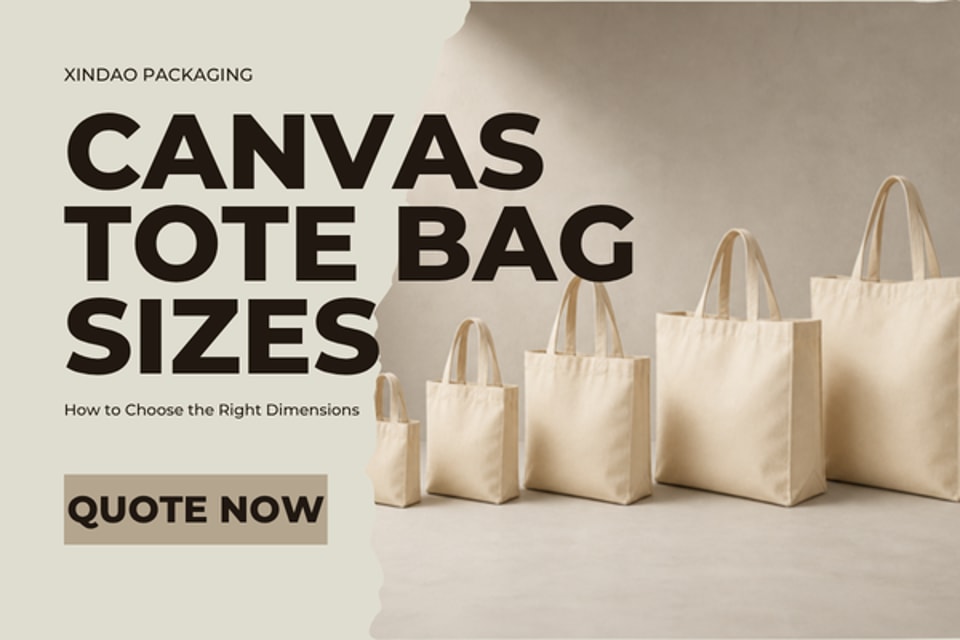
Canvas Tote Bag Sizes: How to Choose the Right Dimensions
Start With What Needs to Fit Inside Choosing the right canvas tote is easier when you start with the items inside it. A bag may look good in a photo. Yet it can feel too small for books, too flat for groceries, or too large for a simple gift set. That is why tote bag sizes matter before you approve a custom order. For a practical choice, look at five points. Check the width, height, depth, handle drop, and usable print area. Together, these details decide how the bag carries, holds its shape, and presents your brand. This guide explains common tote bag sizes in a clear way. It also shows how to choose dimensions for daily use, retail packaging, events, groceries, travel, and custom projects. You do not need to memorize every measurement. You only need to match the bag to its main job. How to Read Canvas Tote Measurements Most suppliers list three main dimensions: width, height, and depth. They may also show handle length. Ask for all four details before you compare tote bag sizes. Width, Height, and Depth Width is the distance across the front of the bag. Height runs from the bottom seam to the top opening. Depth is also called the gusset. It gives the bag room from front to back. A flat bag has little or no gusset. It works well for brochures, light clothing, books, and simple giveaways. A gusseted tote has a wider base or side panels. It holds boxes, groceries, folded garments, and bulkier items more easily. When you review tote bag sizes, read the format as width × height × depth. For example, 16 × 14 × 5 in means 16 inches wide, 14 inches high, and 5 inches deep. Suppliers may also provide the same dimensions in centimetres. Handle Length and Handle Drop Handle length is the full length of the strap. Handle drop is the vertical space from the top of the bag to the lowest point of the handle. Handle drop tells you whether the bag works best in the hand or on the shoulder. A short handle suits a mini gift tote. A longer handle offers more room for shoulder carry. This detail becomes important when bags carry books, groceries, or event materials. It is a small part of the tote size, but it has a big effect on comfort. A Simple Unit Reminder Many buyers use inches. However, most factories work in centimetres. One inch equals 2.54 cm. It is helpful to show both units on your purchase brief. This avoids confusion when you approve canvas tote bag sizes for production. Canvas Tote Bag Size Categories The table below uses a simple format. It shows typical ranges, not fixed industry rules. A supplier can adjust a tote size to suit your product, fabric, and print layout. Category Typical Width (inches) Typical Height (inches) Typical Depth (inches) Typical Contents / Use Specification Focus Mini 7–12 7–13 3–5 Favors, small gifts, cosmetics, small retail items Keep the print simple; short handles are often suitable. Small 12–14 10–14 4–6 Lunch, brochures, books, gift sets Size from the widest or tallest item. Medium 14–16 14–16 5–6 Daily carry, books, light retail, event kits Balanced print field and shoulder-carry comfort. Large Gusseted 18–20 12–15 6–8 Groceries, clothing, books, retail packaging Gusset, reinforced handles, and stable base matter. XL 20–23 14–17 Up to 10 Beach, travel, bulky event materials Use stronger construction and longer shoulder handles. These tote bag sizes provide a useful starting point. The best choice depends on what the user will carry. A large bag is not always the right bag. If the bag is too big, small products can look loose inside. It can also be less comfortable to carry. Choose Tote Bag Sizes by What You Need to Carry The easiest method is to measure the largest item first. Then add space for the opening, side room, and the items that will sit beside it. This approach gives you a more useful result than choosing a bag from a photo. Gifts, Cosmetics, and Small Retail Items Mini and small tote bag sizes work well for candles, skincare sets, small notebooks, wedding favors, and simple retail gifts. A small bag makes the contents look more considered. It also reduces excess fabric and packing space. For a gift set, place the product on a flat surface. Measure its width, height, and thickness. Add some room so the item can enter the bag without forcing the seams. If the gift is boxed, depth often matters more than buyers expect. Use a simple logo or short message on a small front panel. Very detailed art may look crowded. A compact tote size works best when the print stays clean and easy to read. Books, Tablets, and Daily Essentials Medium tote bag sizes are a practical choice for daily use. They can hold a book, water bottle, wallet, light sweater, tablet, or lunch box. They also work well for bookstores, museums, school programs, and brand merchandise. A common daily tote range is about 14–16 inches wide and 14–16 inches high. A shallow gusset adds useful capacity. If the bag needs to hold a tablet or laptop, check the device width and height first. Leave room at the top for easy access. For a standard tote size, a shoulder-friendly handle makes the bag more useful. Many people carry it during a commute or while shopping. Comfort helps a branded bag stay in regular use. Laptops, Conference Kits, and Retail Purchases A laptop, notebook, charger, brochure pack, and water bottle need more room than a flat everyday bag. Choose medium or large tote bag sizes with a gusset when the bag carries several items together. For conference kits, measure the widest folder, catalogue, or box. Add enough depth for other items. A bag that stands upright can make packing easier at an event. It also gives the contents a better presentation. You may need reinforced handles or a stronger bottom seam. The right tote size should support both the volume and the expected weight. Confirm construction details with the supplier before you place a large order. Groceries, Apparel, and Multiple Books Large gusseted tote bag sizes suit grocery shopping, folded clothing, several books, and retail packaging. The gusset gives items a stable base. It helps the tote stand up during filling and carrying. A bag around 18–20 inches wide with a 6–8 inch depth can offer useful capacity. The best final dimensions still depend on the contents. A deep bag can work well for groceries. A wider, lower bag may work better for folded apparel boxes. Choose durable fabric and reinforced handles for a large tote size. Large capacity can encourage users to carry more weight. The construction should match that use. Beach, Travel, and Bulky Event Materials Extra-large tote bag sizes are useful for beach towels, sports gear, travel items, or bulky event materials. They need more than extra fabric. They need good balance, longer handles, and strong seams. Start by laying out the largest item, such as a folded towel or event folder. Then add the smaller items that must fit with it. This gives you a realistic footprint. Do not select an XL bag only because it sounds more useful. A wider tote size may feel awkward when full if the handles are too short. For heavier contents, shoulder carry is often more practical. Test the handle drop and fabric choice during the sample stage. Flat or Gusseted: Why Depth Changes Capacity Two bags can have the same width and height but hold very different amounts. The difference often comes from the gusset. This is one of the most important points when you compare tote bag sizes. A flat tote is simple, light, and easy to fold. It is a good option for documents, books, light clothing, and promotional handouts. It also gives a clean front panel for printing. A flat bag can look neat when the contents stay slim. A gusseted tote has added depth at the bottom, sides, or both. It can hold boxes, groceries, lunch containers, and folded retail items without stretching the front panel. The bag can also stand more easily during packing. For bulky contents, use the interior depth as a key part of the tote size decision. Do not rely on width and height alone. Ask whether the gusset runs only along the bottom or along the sides as well. This affects both capacity and shape. Match Fabric and Construction to Tote Bag Sizes Bag dimensions and bag strength should work together. A larger tote often carries more. It may need heavier canvas, stronger straps, reinforced stitching, or a supported base. Consider these details as you compare tote bag sizes. Small and Medium Bags Small and medium bags can often use lighter or medium-weight cotton and canvas. They work best for modest loads, daily items, lightweight gifts, and event materials. The final fabric choice should match the expected use, not just the desired look. If a medium tote size will hold books or bottles, ask for handle reinforcement and sound stitching. A bag can have modest dimensions but still carry a concentrated load. Construction details matter. Large and Extra-Large Bags Large and XL bags need more attention to their base, handles, and seams. They may carry groceries, towels, clothing, or several products at once. A deeper gusset increases capacity. It can also increase the force on the handles. For large tote bag sizes, discuss the fabric weight, handle material, cross stitching, and base reinforcement with your supplier. These options should fit the intended contents. Avoid choosing a large bag with a light build only to reduce cost. Plan the Print Area Before You Finalize the Bag The outside dimensions of a bag do not equal the usable print area. Seams, gussets, top hems, and handles reduce the space available for artwork. Plan your print area before you finalize tote bag sizes. A small tote may suit a logo, monogram, or short message. A medium bag offers more room for illustration, typography, or a larger brand mark. A large bag can display bold artwork well, but fine detail may become less clear when the bag is full or folded. Keep a safe margin around the seams. Avoid placing important design details too close to the side edge, top hem, or gusset. For a custom tote size, send your artwork early. The supplier can advise on a practical print position and scale. Think about where the tote will appear. A conference bag may need a clear logo from a distance. A retail bag may support a more detailed front design. The best print plan depends on the tote size, the print method, and the customer experience you want. Handle Drop: The Measurement Buyers Often Miss Handle drop affects how a bag feels in use. It is not the same as handle length. Measure from the top edge of the bag to the lowest point of the handle. This is the space available for the hand, arm, or shoulder. Short handles suit small bags and hand carry. Longer handles make shoulder carry easier. For heavier tote bag sizes, a comfortable shoulder option can make the bag much more practical. Think about when the bag will be used. A tote for a summer event may only need room over a light shirt. A grocery or work bag may need to fit over a jacket. Test the proposed tote size and handle drop with a sample when comfort is important. How to Write a Clear Custom Tote Brief A clear brief helps Xindao Packaging quote the right canvas tote. It also reduces changes later. Use the list below when you request custom tote bag sizes. Outer dimensions: width × height × depth, in inches and cm. Main use: gifts, retail, books, groceries, events, travel, or another purpose. Largest item: its width, height, and thickness. Material: cotton, canvas, recycled fabric, or another option. Color: natural, white, black, or a custom color. Handles: total length and required handle drop. Construction: flat or gusseted, with pockets, zipper, lining, or reinforced base if needed. Branding: print method, print position, artwork size, and artwork file. Quantity, packing requirements, and target delivery date. This checklist turns an idea into a workable tote size specification. It gives the supplier enough information to recommend a suitable shape, material, and construction method. Find the Right Canvas Tote Size With Xindao Packaging Xindao Packaging can help you choose canvas tote bag sizes for your product, campaign, or retail program. Share the items you need to carry, your preferred material, color, artwork, quantity, and delivery plan. Our team can recommend practical dimensions, handle options, gusset depth, and print placement. A sample can also help you check the final tote size before bulk production. The right specification supports a better user experience and a stronger branded result. A Quick Size Check Before You Place an Order Before you order, put the main items together on a table. Measure the full group, not one item alone. This simple check helps you compare tote bag sizes with real contents. It also prevents a bag from looking too empty or too crowded. Next, decide how the bag will be carried. A handout bag needs a different shape from a grocery bag. Review tote bag sizes with the user experience in mind. Consider the route from the store, event, or office to home. Check the outer dimensions and the inner space. Seams, hems, and gussets take up room. Ask your supplier to confirm the finished internal space for the tote bag sizes you are considering. This is especially helpful for fitted boxes and product sets. Use a paper mock-up if the product is unusual. Fold the paper to the proposed width, height, and depth. Then place the item inside. This low-cost test can make tote bag sizes much easier to understand before sampling. For branded projects, place a paper logo on the mock-up. Check its scale from a normal viewing distance. The best tote bag sizes give your artwork enough room without making the bag hard to carry. Review the carton plan as well. Larger bags can take more space during packing and freight. When you compare tote bag sizes, consider the total project cost, not only the unit price. A practical shape can improve both packing and presentation. Finally, request a sample if fit and comfort are important. It lets you test the opening, depth, handle drop, and print placement. A sample confirms whether your chosen tote bag sizes suit the real product and the final user. Common Questions to Ask When Comparing Sizes Ask which tote bag sizes fit your product without bending or overfilling it. Ask which tote bag sizes allow the user to carry the bag comfortably. These two questions narrow the choice quickly. Compare tote bag sizes with the planned artwork. A wide front panel suits a horizontal logo. Taller tote bag sizes may suit a vertical graphic or a longer message. Check whether tote bag sizes need a flat profile or a strong gusset. Flat tote bag sizes are easy to store. Gusseted tote bag sizes give retail products more usable space. Review tote bag sizes with your packaging team. They can confirm whether cartons, inserts, and tissue paper will fit. This step also helps estimate packing space. For promotional programs, choose tote bag sizes that match the giveaway. The bag should feel useful after the event. Good tote bag sizes support repeat use and longer brand visibility. For retail orders, compare tote bag sizes with the average purchase. The bag should suit normal sales, not only the largest item. This keeps the format practical for most customers. When in doubt, request two samples in different tote bag sizes. Put the actual product in each sample. This is the clearest way to confirm the final choice. Make a final note of your selected tote bag sizes before approval. Include width, height, depth, handle drop, fabric, and artwork position. This keeps every team member aligned. The best tote bag sizes are simple to carry, easy to pack, and suitable for the brand. A clear size decision makes the rest of the custom process easier. Final Planning Notes for Buyers Use tote bag sizes to guide the whole project, from artwork to shipping cartons. Clear tote bag sizes make approval faster. They also reduce costly changes after sampling. Compare tote bag sizes against your exact product. Do not choose tote bag sizes from product photos alone. Real measurements give better results. Ask for drawings that show tote bag sizes clearly. The drawing should show width, height, depth, and handles. This makes the specification easy to check. Select tote bag sizes that fit your brand use. Event bags, retail bags, and travel bags need different proportions. Good tote bag sizes match the purpose first. Test tote bag sizes with the intended user in mind. A bag should be easy to open, fill, and carry. This practical test can improve the final design. Xindao Packaging can help compare tote bag sizes before production. Send the contents and artwork. We can recommend a practical specification. FAQ: Tote Bag Sizes What is the most common canvas tote size? A medium tote is often the most versatile option. Typical tote bag sizes in this group measure around 14–16 inches wide and 14–16 inches high. A shallow gusset can add room for daily items, books, light groceries, or event materials. What tote bag size fits a 13-inch laptop? Measure the laptop with its sleeve first. A medium or large tote can work if the interior width and height exceed the device dimensions. Add room for a charger, notebook, and easy access. A gusset can help if you carry several items together. How deep should a grocery tote bag be? Many grocery bags benefit from a 6–8 inch depth. The right depth depends on the products you carry. A gusseted base helps the bag stand during packing and supports boxes, bottles, and produce more comfortably. What is the difference between handle length and handle drop? Handle length measures the full strap. Handle drop measures the open space between the bag top and the lowest point of the strap. Handle drop is more useful when you want to know if the bag will fit on a shoulder. Can I order custom tote bag sizes? Yes. You can request custom dimensions when standard options do not fit your product or campaign. Provide the dimensions of the largest item, the expected contents, material preference, handle needs, artwork, and quantity. Xindao Packaging can then suggest a practical size.
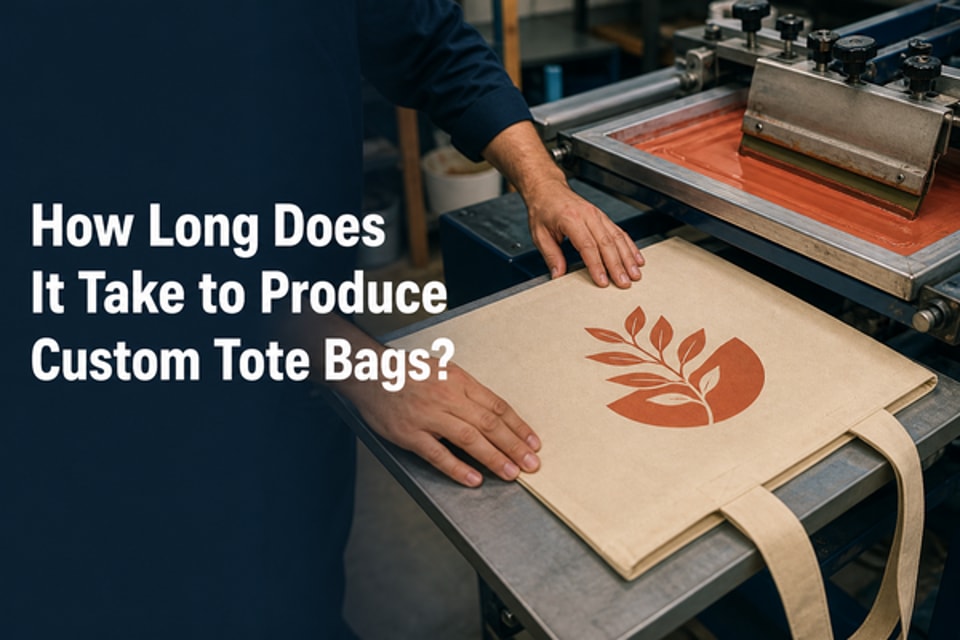
How Long Does It Take to Produce Custom Tote Bags?
Introduction A custom tote order needs more than a good logo. It needs a clear schedule. Buyers often ask when production starts, how long printing takes, and when bags can ship. The answer depends on the bag color, print method, quantity, and final design details. At Xindao Packaging, we use clear production windows for bulk orders. The timing below is based on about 5,000 white or natural canvas bags. These windows cover mass production. They do not include freight, customs clearance, or final local delivery. A standard custom tote can move quickly when the artwork is ready and the bag details are fixed. A more detailed design needs more time. Embroidery, special colors, extra print locations, and custom packaging can also extend the schedule. This guide explains each stage in simple terms. It also shows how buyers can plan custom printed canvas tote bags without last-minute pressure. Use the timeline as a planning tool, then ask Xindao Packaging for a quote based on your exact order. The Quick View of Production Time The fastest option is blank bags. They can usually be ready within 7 days. Digital printing takes 7–15 days. Heat transfer, screen printing, and sublimation each take 10–15 days. Embroidery needs the longest window at 25–30 days. These estimates apply to a bulk order of about 5,000 bags in white or natural color. Add 5 days if you need a custom bag color. This extra time allows for color preparation before bulk work starts. A custom tote schedule starts after the order details are confirmed. You should finalize the bag size, fabric, handle style, print position, artwork, quantity, and packing needs early. Fast approval keeps the production plan moving. Printing Method Estimated Mass Production Time Best Planning Use Blank Within 7 days Standard bags with no decoration Digital Printing 7–15 days Detailed or full-color artwork Heat Transfer 10–15 days Specialty finishes and complex graphics Screen Printing 10–15 days Bold logos and bulk runs Sublimation 10–15 days Compatible material and vivid artwork Embroidery 25–30 days Premium, textured branding What Happens Before Production Begins? Production does not start when you first send an inquiry. It starts when the main details are ready. This preparation stage helps avoid mistakes on custom printed canvas tote bags. Confirm the Artwork and Bag Details Send artwork that you own or have permission to use. Vector files such as AI or editable PDF work well for logos. Include the print size, print position, and color reference. A clear file reduces revision time. You should also confirm bag dimensions, canvas weight, handle length, gusset, pocket, zipper, label, and packaging. These details affect both cost and lead time. A custom tote with a simple open top moves faster than one with several added features. Check Fabric and Bag Color White and natural color bags form the basis of the timeline in this guide. They help Xindao Packaging plan material preparation efficiently. A custom bag color needs an extra 5 days. Confirm color requirements before you approve the order. Custom colors can support your brand identity. However, they need more preparation than standard colors. If your deadline is tight, a white or natural custom tote may offer a more efficient route. Decide Whether You Need a Sample A sample lets you inspect the fabric, stitching, size, color, and decoration before mass production. It is useful for new designs, color-sensitive projects, detailed branding, or special construction. Xindao Packaging offers sampling before bulk production. Except for embroidered custom bags, the sample fee is refundable when you place a bulk order of at least 1,000 pieces. Sampling can protect your project from costly changes later. Xindao Sample Time and Fee Guide Sampling adds a short stage before mass production. The exact cost depends on the bag type and decoration method. The table below helps you build that stage into your custom tote plan. Printing Method Sample Fee Sampling Time Blank 30–150 CNY, depending on bag type 1–3 days Digital Printing 30–150 CNY, depending on bag type 1–3 days Heat Transfer 100–150 CNY, depending on bag type 3–5 days Screen Printing 100–150 CNY, depending on bag type 3–5 days Sublimation 100–150 CNY, depending on bag type 3–5 days Embroidery 600 CNY 5–7 days For non-embroidered custom bags, the sample fee can be refunded after a bulk order of 1,000 pieces or more. Embroidery follows a different fee rule. Confirm the sample request and refund terms in your quotation. A sample does not replace a clear brief. Send the final artwork and full bag details before sampling. This makes the sample more useful. It also helps the final custom tote match your expectations. Why Each Decoration Method Needs a Different Timeframe Each decoration method uses a different process. This is why lead times vary for custom printed canvas tote bags. Choose the method based on your artwork, quantity, visual goal, and delivery date. Blank Bags: Within 7 Days Blank bags have no printing or embroidery stage. Xindao Packaging can focus on bag preparation, quality checks, folding, and packing. This is the fastest route for customers who plan to decorate bags locally or need standard bags for a simple project. Even blank orders need clear specifications. Confirm size, fabric, color, handles, and packing. A blank custom tote may still include special construction, so not every blank order follows the same schedule. Digital Printing: 7–15 Days Digital printing works well for detailed images, gradients, and full-color designs. It can support flexible artwork without separate screens for every color. The production window depends on image complexity, print size, and order requirements. For custom printed canvas tote bags, send high-resolution artwork at the final print size. This allows the team to check clarity before production. A prompt proof approval helps digital printing stay within the planned range. Heat Transfer: 10–15 Days Heat transfer can create detailed graphics and specialty effects. The process needs transfer preparation, accurate positioning, heat pressing, and inspection. Each bag must meet the required placement and finish standard. Use this option when your design needs effects that standard screen printing may not provide. Include the expected finish in your request. A clear brief helps Xindao Packaging plan your custom tote order correctly. Screen Printing: 10–15 Days Screen printing suits bold logos, solid colors, and larger quantities. The process includes screen preparation, ink mixing, printing, curing, and quality checks. Multi-color artwork can require extra setup. This method is often a strong choice for custom printed canvas tote bags with simple branding. It gives consistent results across a bulk run when the artwork and color details are approved early. Sublimation: 10–15 Days Sublimation creates vivid color results on compatible materials. It is usually better for polyester-based or suitable coated fabrics than for standard natural cotton canvas. Material compatibility should be confirmed before you select this method. Share the artwork and fabric requirement at the quote stage. This helps prevent an unsuitable decoration choice. It also keeps your custom tote project on a realistic production path. Embroidery: 25–30 Days Embroidery creates a textured and durable finish. It is a good option for simple logos, letters, and premium brand marks. The process needs artwork digitizing, thread selection, machine time, trimming, and close inspection. Embroidery takes longer because each design is stitched into the fabric. A dense design also requires more machine time. For premium custom printed canvas tote bags, allow enough time for both sample review and mass production. Production Timing for 5,000 White or Natural Canvas Bags The Xindao Packaging table uses a clear benchmark: about 5,000 bags in white or natural color. This gives buyers a useful starting point. It also makes it easier to compare decoration methods. The actual production time can change when a project includes special fabric, custom size, lining, zipper, pockets, labels, multiple print positions, or special packing. These elements add steps to the workflow. They may also need more quality checks. A custom tote project moves faster when the details stay stable. Late changes can affect material planning and machine scheduling. Review the quote, artwork proof, and sample carefully before you confirm bulk production. Use the stated timeline as an estimated factory window. Do not treat it as a final arrival date. You still need to add shipping time, customs clearance, and local delivery time to your overall plan. Factors That Can Add Time to Custom Printed Canvas Tote Bags Some changes are necessary. Others can be avoided with early planning. Understanding these factors helps you protect your delivery date for custom printed canvas tote bags. Custom Bag Colors Add 5 Days The main timing table applies to white or natural bags. Add 5 days for custom bag colors. This time supports color preparation before the bulk order enters the main production flow. Changes After Artwork Approval A new logo file, changed print size, extra print location, or revised color can delay the order. These changes may require a new proof, revised setup, or a new sample. Finalize the artwork before production starts. Extra Construction Features Zippers, linings, internal pockets, webbing handles, reinforced bases, woven labels, hangtags, and special packaging can add work. Each feature can make a custom tote more useful. Each feature can also add time. Complex Decoration Requirements A large front-and-back print, many colors, metallic finishes, dense embroidery, or several decoration methods can extend the schedule. Explain your goal early. Xindao Packaging can then recommend a practical method and production window. Peak Production Periods Seasonal campaigns and year-end gift programs can create busier factory schedules. Plan ahead for trade shows, holiday promotions, school programs, and major retail launches. Early booking gives your custom tote order more scheduling flexibility. How to Keep Your Custom Tote Order on Schedule You can reduce delays with a few simple actions. These steps help both your team and the factory work from the same plan. Send Production-Ready Artwork Use clear, non-infringing files. Include color references and print placement. Do not send a low-resolution logo taken from a website. Good artwork saves time during proofing. Finalize Quantity, Color, and Packaging Early Confirm your order quantity before production. Select white, natural, or a custom color. State how you want the bags packed. This information helps Xindao Packaging reserve materials and plan cartons. Approve Proofs and Samples Quickly Review proofs as soon as you receive them. Check spelling, colors, logo size, and position. If you order a sample, test it with real contents. Fast approval supports a stable production schedule for custom printed canvas tote bags. Build a Delivery Buffer Factory production is only one part of the timeline. Add time for shipping, customs, and local delivery. For an event, do not plan arrival for the day before setup. A reasonable buffer protects your custom tote project from transport delays. Production Time and Shipping Time Are Different Production time covers factory work. It includes material preparation, decoration, sewing, quality inspection, folding, and packing. Shipping time starts after the cartons leave the factory. Your full planning formula is simple: approval time + sampling time, if needed + mass production + freight transit + customs clearance + final delivery buffer. This formula gives a more realistic date for custom printed canvas tote bags. Ask Xindao Packaging for the factory production window first. Then choose a shipping method that fits your target date and budget. Your destination, freight method, and customs process will affect the final transit time. Start Your Custom Tote Project With Xindao Packaging Xindao Packaging helps buyers plan custom tote projects with clear production stages. We can review your bag style, fabric, color, artwork, print method, sampling needs, packing, and target delivery date. Send your quantity, bag dimensions, preferred color, artwork, decoration method, and destination. Our team can provide a tailored quote and a practical production estimate for custom printed canvas tote bags. Early planning helps you balance speed, quality, and cost. Before approval, review the full plan for your custom tote. Check the bag style, artwork, decoration, packing, and target date. This step helps custom printed canvas tote bags move through production with fewer changes. A clear brief gives your custom tote project a stable starting point. It also helps the factory schedule custom printed canvas tote bags with the correct materials and process. Early choices protect both quality and timing. Use the production table when you compare custom tote options. It helps you select a method that fits the artwork and deadline. For detailed graphics, plan custom printed canvas tote bags early and approve the proof quickly. A sample can confirm if your custom tote meets the expected quality. It can also show how custom printed canvas tote bags look with your chosen fabric and print method. This check supports a more confident bulk decision. For event programs, keep a buffer after your custom tote production window. Freight and customs can change the arrival date. A well-planned order of custom printed canvas tote bags gives your team more time to prepare. Xindao Packaging can review each custom tote requirement before production. Share your artwork and schedule. We can help plan custom printed canvas tote bags with a realistic factory window. FAQ: How fast can Xindao Packaging produce blank canvas bags? For about 5,000 white or natural bags with confirmed specifications, blank bag mass production can be completed within 7 days. This estimate does not include freight or customs transit. How long does digital printing take for custom printed canvas tote bags? Digital printing is estimated at 7–15 days for the stated 5,000-piece white or natural-color benchmark. Artwork complexity, print size, and proof approval can affect the final schedule. Why does embroidery take 25–30 days? Embroidery needs digitizing, thread preparation, machine time, trimming, and detailed inspection. Dense artwork can take longer to stitch. This process creates a premium finish, but it needs a longer production window. Does a custom bag color increase production time? Yes. Add 5 days for a custom bag color. The main table uses white or natural color as the production benchmark. Confirm your color choice before bulk work begins. Does the production timeline include shipping? No. The stated ranges cover estimated mass production. Add separate time for artwork approval, sampling, freight transit, customs clearance, and final delivery.
How to Choose Canvas Weight for Customized Bags
Start With the Fabric Behind a Better Bag Canvas weight is one of the first specifications to review when developing reusable carry products. It affects the hand feel, shape, load performance, print result, production cost, and long-term value of customized bags. A thin event giveaway, a structured retail carrier, and a heavy grocery tote may all look similar at first glance, but their fabric and construction requirements are very different. For buyers planning shopping bags, promotional giveaways, team kits, business gifts, event packaging, or retail merchandise, the goal is not to select the heaviest fabric automatically. The right choice is the weight that fits the expected contents, brand position, customization method, budget, and shipping plan. A practical specification can help recipients reuse the bag more often while keeping production costs realistic. This guide explains how to compare common canvas weights from 6 oz to 14 oz, evaluate performance beyond fabric thickness, and select customized bags that work for real business applications. It also covers printing, embroidery, construction features, cost planning, and the questions buyers should resolve before placing a bulk order. Reading Canvas Weight Specifications Correctly Fabric weight is a useful starting point for comparing customized bags, but it should be understood in the right context. Suppliers may list canvas in ounces or grams, and the label describes fabric mass rather than a guaranteed load limit. Ounces Per Square Yard: The Standard Canvas Reference In the bag industry, canvas is often measured in ounces per square yard, written as oz/yd². A 10 oz fabric means that one square yard weighs approximately 10 ounces. In general, a higher number indicates a heavier, thicker, and more structured material. This difference affects whether a bag folds softly, stands more upright, or feels substantial in the hand. GSM: A Metric Way to Compare Fabric Many suppliers use grams per square meter, or GSM (g/m²). As a practical conversion, 1 oz/yd² is approximately 33.9 GSM. Therefore, 6 oz canvas is about 203 GSM, 10 oz is about 339 GSM, and 14 oz is about 475 GSM. Use these figures as a comparison tool, but request the supplier’s actual composition and specification when weight is important to your project. Weight Is Only One Part of Bag Quality Canvas weight alone does not define quality. Yarn strength, weave density, dyeing, coatings, stitch quality, handle attachment, reinforcement, gussets, and the intended load also matter. Well-designed customized bags use these elements together. A medium-weight tote with reinforced handles and solid seams can perform better than a heavier bag with weak construction. Why Fabric Weight Changes Everyday Bag Performance The fabric selected for customized bags influences the way people experience them after receiving them. Lighter canvas is flexible, compact, and economical. It can be a good fit for brochures, samples, and small gifts. Heavier canvas provides more body and a more premium feel, making it useful for repeated shopping, books, groceries, and gift merchandise. Durability involves more than preventing tears. It includes how well the bag retains its shape, how comfortable the handles feel under load, how the base supports contents, and how the fabric responds to repeated folding and carrying. A bag intended for a one-day conference may not need the same specification as a bag sold in a bookstore or used for weekly grocery shopping. For this reason, buyers should begin with the intended use. Estimate the typical contents, their combined weight, and how frequently the bag may be reused. Then choose a material and construction that offer enough performance without adding unnecessary cost or shipping weight. The best customized bags balance a credible user experience with the realities of a bulk project. Canvas Ranges for Different Bag Programs Common canvas weights fall into practical groups. Each group can be suitable when it is matched with the right application, artwork, and construction. 4 oz to 8 oz: Flexible Options for Light Distribution Lightweight canvas is easy to fold, store, and hand out in volume. At 6 oz, a bag can work for flyers, brochures, light samples, small gifts, and cost-sensitive promotional campaigns. At 8 oz, the material gains a little more substance while remaining practical for events, school programs, and simple retail handovers. These customized bags are best used with realistic load expectations. They can be a smart choice when wide distribution, compact packing, and controlled unit cost matter more than a highly structured feel. For heavier contents, specify appropriate handle stitching or move to a stronger fabric option. 10 oz to 12 oz: The Versatile Middle Ground Medium-weight canvas is often the most adaptable category for customized bag projects. A 10 oz tote generally offers a useful balance of durability, print surface stability, foldability, and price. It suits custom-logo programs, trade-show materials, reusable shopping, team kits, and everyday retail packaging. At 12 oz, the bag gains more structure and a more substantial hand feel. This makes it a practical choice for boutiques, corporate gifts, catalogs, books, groceries, and projects where repeat use is expected. Many buyers choose this range when they want a customized tote bag to look purposeful rather than disposable. 14 oz and Higher: Built for Weight and Presence Heavy canvas creates a stronger, more structured impression. A 14 oz bag can be appropriate for premium merchandise, grocery programs, heavier books, boxed products, and long-term retail use. It generally carries a higher material and freight cost, so it is best selected when the extra strength and perceived value support the campaign objective. Heavier fabric should still be paired with suitable handles, stitching, and a gusset if the bag will carry bulky goods. In other words, heavy canvas is a useful foundation, not a substitute for thoughtful construction. Selecting a 6 oz to 14 oz Canvas Weight for Your Project Choosing fabric starts with the bag’s job. Rather than asking which weight is universally best, ask what the recipient needs to carry and how the finished product should feel. Use 6 oz or 8 oz When Reach and Budget Lead For large giveaways, brochures, lightweight samples, and simple event packs, 6 oz or 8 oz can be a sensible option. These customized bags are easier to fold and distribute, and they can help keep material and shipping costs under control. Use bold, uncomplicated branding and avoid designing the bag for loads it is not intended to support. Use 10 oz for the Most Balanced Everyday Option A 10 oz specification works well when you need a reliable, general-purpose carrier. It provides a stable base for logos and practical capacity for shopping items, event materials, clothing, and documents. For many brands, it is the point where price, durability, and a professional appearance meet effectively. Use 12 oz for Higher-Reuse Retail and Gift Programs Consider 12 oz canvas for retail packaging, trade shows with substantial contents, corporate gifting, and reusable shopping applications. The fabric gives customized bags more structure and can help the product feel more premium. It is especially useful when the bag itself is part of the customer experience rather than simply a delivery vehicle. Use 14 oz for Heavy Contents or Premium Merchandise Choose 14 oz canvas when the bag may carry multiple books, groceries, bottles, or heavier gift sets, or when you want a robust product for a premium collection. Review the total design: a gusseted base, reinforced handles, and suitable stitching are just as important as the fabric weight. How Canvas Weight Influences Your Printed Identity A logo can look different on each fabric weight because material texture and stability influence ink coverage and edge definition. The best customized bags consider the artwork and decoration process at the same time as fabric selection. Screen Printing for Clear, Simple Brand Marks Screen printing is effective for bold logos, solid colors, and larger bulk orders. On 8 oz canvas, simple designs usually perform well, although fine text can be less crisp on lighter fabric. A 10 oz or 12 oz surface often offers more stability for clean logo edges and strong color coverage. On 14 oz canvas, bold artwork is usually more suitable than very fine detail because the texture can be more noticeable. Digital Printing for Detailed, Full-Color Graphics Digital printing can suit photos, gradients, and multi-color illustrations, particularly for lower quantities or artwork that would require many screens. A smoother, lighter-colored fabric can help detail reproduce clearly. Share artwork at final size and request a proof or sample so the expected result on your chosen canvas is understood. Heat Transfer and Sublimation for Specialized Effects Heat transfer can provide specialty finishes, metallic elements, or complex artwork when compatible with the fabric and process. Sublimation is normally best suited to polyester-based or specially coated materials; it is not usually the first choice for standard natural cotton canvas. Embroidery for a Premium Customized Tote Bag Embroidery gives a textured, long-lasting finish for simple logos, initials, and brand marks. Medium-weight canvas, especially 10 oz to 12 oz, often provides a stable foundation that helps reduce puckering around stitches. Light 6 oz fabric may work for a small simple mark but is less suitable for dense designs. For a premium customized tote bag, confirm stitch count, backing, and placement during sampling. Planning the Budget Across Canvas Weights Fabric weight directly affects the material cost of customized bags. Heavier canvas uses more material and can require more effort to cut, sew, fold, and pack. It may also increase carton weight and international freight. These costs should be reviewed alongside the expected lifespan and perceived value of the finished bag. Lightweight canvas is usually the most economical choice for broad promotional distribution. Medium-weight canvas can offer a better value proposition for programs where recipients are expected to reuse the item. Heavy canvas costs more, but it may be worthwhile for premium retail, grocery, bookstore, and corporate gift applications where strength and structure influence customer perception. Avoid evaluating only the lowest unit price. Compare like-for-like specifications: composition, weight, dimensions, gusset, handle reinforcement, print method, labels, packaging, quality control, and delivery terms. The most cost-effective solution is often the one that meets the required use without overengineering or underperforming. Canvas Weight Performance at a Glance The comparison below provides a planning reference for common customized bags. Actual performance depends on the exact weave, composition, stitching, bag dimensions, and construction. Canvas Weight Approx. GSM Feel and Durability Printing and Embroidery Relative Cost Recommended Applications 6 oz 203 GSM Light, foldable, suited to light loads Simple printing; avoid dense embroidery Low Giveaways, brochures, light gifts 8 oz 271 GSM Flexible with improved everyday performance Good for basic logos; small embroidery Low–medium Events, promotions, simple retail bags 10 oz 339 GSM Balanced and durable for regular use Very good for print; good embroidery base Medium Custom logos, shopping, trade shows, team bags 12 oz 407 GSM Structured, strong, and premium-feeling Excellent for bold print and embroidery Medium–high Retail, corporate gifts, books, reusable shopping 14 oz 475 GSM Heavy-duty, thick, and substantial Best for bold designs and premium embroidery, but tiny details may be affected High Groceries, heavy products, premium merchandise Pair Fabric Weight With the Right Construction Canvas selection should be coordinated with bag structure. This is how customized bags become dependable products rather than fabric with handles. Reinforced Handles Carry the Real Load Handle length, width, material, and attachment method affect comfort and carrying strength. For bags intended to carry books, groceries, bottles, or event materials, reinforced box stitching or cross stitching can add meaningful support. Test a sample with representative contents rather than relying on fabric weight alone. Gussets Improve Capacity and Presentation A bottom or side gusset creates room for wider items and can help a bag stand more upright. It is especially useful for retail packaging, food containers, gift boxes, and grocery items. A 12 oz gusseted tote may be more functional for bulky products than a flat 14 oz style with limited internal volume. Closures, Pockets, and Lining Should Have a Purpose Zippers can secure commuting or travel items; inner pockets can organize phones, keys, and receipts; lining can create a more refined appearance. These features increase complexity and cost, so include them when they improve real-world use. Match every feature to the project’s contents and audience. Scale the Fabric to the Bag’s Dimensions A compact flat bag does not always need 14 oz material. Conversely, a large grocery tote may need a heavier fabric, wide gusset, and reinforced handles. Specify size, intended load, and use frequency together to select customized bags that feel balanced in hand. Recommended Canvas Weights by Business Application Different business programs call for different levels of structure, capacity, and branding quality. Promotional Giveaways and Community Events Use 6 oz or 8 oz for brochures, small gifts, samples, and high-volume distribution. Keep artwork simple and make sure the bag is sized for the actual contents. Retail Shopping and Boutique Packaging Use 10 oz or 12 oz for apparel, beauty products, books, and gift purchases. These weights make customized bags feel more durable and encourage customers to reuse them beyond the point of sale. Trade Shows, Teams, and Corporate Programs Choose 8 oz to 12 oz according to the contents. A light event pack may work with 8 oz, while catalogs, welcome kits, and employee gifts often benefit from 10 oz or 12 oz fabric, plus handles that support daily carrying. Groceries, Bookstores, and Heavy Products Choose 12 oz or 14 oz where loads may include bottles, canned goods, multiple books, or boxed products. Reinforced handles and a gusseted base are important additions for this category. Premium Branded Merchandise For a retail product or high-value gift, 12 oz or 14 oz canvas can create the desired structure and perceived quality. Pair it with polished stitching, a considered color palette, and an appropriate decoration method to strengthen the final presentation. Avoid These Fabric-Selection Errors Do not assume that the heaviest option is automatically best. Heavy canvas can increase price and freight without improving a simple giveaway program. At the same time, do not choose lightweight fabric for a bag expected to carry dense or bulky contents. Avoid selecting canvas before confirming the artwork and decoration method. Fine detail, dense embroidery, metallic effects, and full-color graphics can have different material requirements. Also, do not overlook handle stitching, gussets, and sample approval. These details often determine whether customized bags perform well after delivery. A physical sample remains the most reliable way to review fabric feel, capacity, stitching, color, and branding together. It allows you to make informed changes before a bulk production commitment. Choose the Right Canvas Specification With Xindao Packaging Xindao Packaging helps buyers develop customized bags that match their intended use, brand direction, and bulk-order requirements. We can help compare cotton and poly-cotton options, select suitable weights, refine dimensions and construction, and review decoration methods for your artwork. Send your intended use, quantity, bag dimensions, fabric preference, required features, artwork, and destination to request a tailored recommendation or quote. With the right balance of canvas weight, structure, and customization, customized bags can provide durable utility and sustained brand visibility. Applying the Weight Decision to Your Customized Bags Use the following practical checkpoints before approving fabric. First, identify the normal contents and the heaviest realistic load. Second, decide whether recipients will treat the item as a short-term giveaway or as a reusable product. Third, review the artwork and decoration method with the fabric choice. These steps make it easier to specify customized bags that fit the program instead of selecting weight by appearance alone. For short campaigns, customized bags can prioritize foldability and reach. For retail, customized bags should offer enough structure to improve the handover experience. For employee programs, customized bags can be selected for documents, technology accessories, or daily essentials. For exhibitions, customized bags need to accommodate the materials attendees receive. For grocery and bookstore use, customized bags should be specified with the intended load, reinforced handles, and practical capacity in mind. Ask for a sample when weight, color, print, or construction is important. A loaded sample reveals whether customized bags are comfortable to carry and whether the dimensions are fit for purpose. Compare the fabric to the approved specification, inspect the seam and handle finish, and test the decoration at normal viewing distance. This process helps ensure customized bags meet expectations before a bulk order is released. A concise request for quotation should identify fabric composition, oz or GSM, finished dimensions, gusset depth, handle style, color, printing, packaging, quantity, and delivery point. Clear information enables suppliers to quote customized bags on a like-for-like basis. It also helps avoid an order in which customized bags are technically correct but unsuitable for the actual product or audience. Consider the total value of the program. A lower-cost option can be effective when customized bags are used for light contents and wide distribution. A heavier option may provide better value when customized bags are expected to be reused over a longer period. The right choice depends on how the bag is carried, what it contains, and what message the brand wants the finished item to communicate. Before approval, verify the final fabric, decoration, and construction against the sample. Confirm that customized bags have the right capacity, that the logo is clear, and that the planned packaging protects them in transit. With this detail in place, customized bags can support a reliable, consistent branded experience across retail, events, business programs, and gifting. Final Checklist Before You Order Customized Bags Use this checklist to align the material with the commercial purpose of customized bags. Confirm the product load, the preferred hand feel, and the reuse target. Check whether customized bags need a flat profile for simple distribution or a gusset for boxes, bottles, and food containers. Decide whether customized bags should be easily folded for shipping or structured for retail display. Review the decoration alongside the substrate. If customized bags use small text, fine line art, or dense embroidery, request a production-like sample. If customized bags will display a bold one-color mark, screen printing may be efficient at scale. If customized bags require detailed multicolor artwork, confirm the proposed digital or transfer method and the expected result on the chosen fabric. Specify construction details in writing. Describe handle length, attachment method, seam finish, pocket requirements, closure type, and gusset depth. These details help ensure customized bags are suited to the recipient rather than only visually appealing. For heavier programs, ask how customized bags will be reinforced and what load conditions were considered during development. Review cost as a complete program. The unit price for customized bags should be compared with the fabric composition, weight, decoration, packaging, inspection, and freight terms. A bag selected for long-term reuse may justify a higher initial cost if customized bags deliver stronger brand visibility and better user value. Conversely, lighter customized bags may be the appropriate choice for a high-volume, short-duration event. Before bulk release, approve the physical reference. Confirm that customized bags match the agreed dimensions, fabric, color, logo placement, stitching, and packaging. Keep the approved sample and specification for reorders. This provides a clear standard when customized bags are produced again for another campaign, store season, or team program. The decision should always return to user experience. Customized bags that are comfortable, useful, and visually clear are more likely to be carried repeatedly. When fabric weight and construction match the job, customized bags become practical brand tools instead of disposable promotional items. A Practical Decision Rule for Customized Bags For most projects, start with 10 oz when customized bags need balanced cost, printing, and everyday performance. Move to 12 oz when customized bags must feel more structured for retail, gifts, or frequent reuse. Select 14 oz when customized bags carry heavy products and the construction supports that load. Choose 6 oz or 8 oz when customized bags are intended for light promotional contents and broad distribution. Use the sample stage to verify the decision. Compare customized bags with representative contents, review the logo in normal use, and check handles and seams. This simple review prevents customized bags from being overbuilt, underbuilt, or mismatched to the campaign. Clear specifications help customized bags deliver useful carrying performance, a consistent brand image, and a more reliable bulk-order result. In every category, customized bags should be developed around actual use. Strong customized bags combine suitable fabric, secure construction, and readable branding. Tested customized bags reduce uncertainty before bulk production. Well-specified customized bags create a dependable result for recipients and brands. FAQ: Choosing Canvas Weight for Customized Bags What does “oz” mean in customized bags weight? It represents the weight of one square yard of fabric in ounces. In general, a higher oz figure indicates denser, heavier, and more structured canvas, although final bag quality also depends on weave, stitching, handles, and construction. What canvas weight works best for embroidery on customized bags? Medium weights, especially 10 oz to 12 oz, are often ideal because they provide a stable base that helps prevent puckering. Very lightweight fabric can distort around dense stitches. Review the embroidery design, stitch count, backing, and placement on a physical sample before production. Can 6 oz customized bags handle grocery shopping? A 6 oz tote can carry light to medium grocery loads, but it is not the preferred option for repeated heavy shopping. Heavier items benefit from reinforced handles and a gusseted base. For regular groceries, consider 10 oz to 14 oz depending on the expected load. How does a 6 oz tote bag differ from a 12 oz tote bag? A 6 oz canvas is lightweight, soft, and foldable, which suits giveaways and light contents. A 12 oz canvas is roughly twice as heavy by area, more rigid, and better suited to structured retail, gift, and repeated-use applications. What customized tote bag weight is recommended for carrying heavy books? Choose 12 oz or higher for multiple books, particularly when the bag has reinforced handles and a gusset. A 14 oz option can be appropriate for heavy bookstore merchandise or frequent carrying, but construction should be reviewed with the full load in mind.
How to Order Custom Canvas Bags Step by Step at Xindao Packaging
Introduction: Turn Your Bag Idea Into a Branded Product A reusable bag can keep a brand visible long after a purchase, meeting, or event has ended. Custom canvas bags give retailers, corporate teams, event organizers, and gift programs a practical way to carry products while displaying a logo. When the bag is useful, it can travel to shops, offices, campuses, and destinations where it creates repeated exposure. Ordering custom canvas bags is easier when the project follows a clear sequence. Define the purpose, contents, material, construction, artwork, quantity, and delivery requirement before production begins. This approach helps control quality, cost, timing, and branding. Whether the project is a shopping bag, employee welcome kit, event giveaway, gift bag, or travel accessory, a concise brief is the starting point. This guide explains how to develop custom canvas bags from an initial idea through bulk delivery with Xindao Packaging. Why Choose Custom Canvas Bags for Your Brand? Custom canvas bags combine everyday usage with long-term marketing value. Canvas offers a natural texture, a broad printable surface, and a construction suited to repeat use. A bag that can carry groceries, books, documents, gifts is more likely to stay in circulation, giving your identity visibility beyond the original handover. A custom branded tote bag gives your organization control over the customer experience. Select colors that suit a campaign, add approved artwork, and choose features that make the bag worth keeping. The goal is not simply to put a logo on fabric. It is to create a practical item that recipients choose to carry, so brand recognition develops naturally through use. Step 1: Define the Purpose of Your Custom Canvas Bags Start by clarifying why we need the bag and who will receive it. Custom canvas bags for a product launch may need bold artwork and fast packing. Retail bags may need heavier fabric, a gusset, and premium finishing. A clear purpose guides the specification and avoids paying for features that do not support the end user. Identify the End Use List the expected contents and the setting. Shopping bags may carry apparel, cosmetics, books, or boxed goods. Conference bags may hold folders and samples. Gift bags need to present curated items neatly, while travel programs may benefit from a zipper or pocket. When you know how people use custom canvas bagss, you can choose construction based on function rather than appearance alone. Estimate Quantity and Budget Set the required quantity, target unit cost, and quantity tiers you would like quoted. Volume, print colors, bag construction, packaging, and shipping all affect price. If you have a limited fund, protect the elements that affect use first: fabric, dimensions, handles, and stitching. Decorative additions should support the campaign, not compromise the working budget. Select the Right Capacity Measure contents before choosing dimensions. Consider width, height, depth, and the ease of packing. Flat custom canvas bags suit lighter materials, while gusseted styles create volume for groceries, boxes, bottles, and food containers. Testing a sample with real products prevents an attractive bag from becoming no use. Step 2: Choose Materials, Weight, and Construction Material and construction determine how custom canvas bags feel, carry, print, and perform. The right choice should reflect the expected load, desired brand position, and intended environment. Select Fabric Weight for Your Carrying Needs Canvas weight is commonly expressed in ounces per square yard. Lighter material can suit small giveaways. Midweight material is versatile for everyday use. Heavier canvas gives more structure for books, groceries, or premium gifts. Weight alone does not determine performance. Seams, handle attachment, reinforcement, and gusset design also determine how custom canvas bags carry a load. Consider Gussets, Handles, Pockets, and Closures A gusset adds depth for wider items. Long handles suit shoulder carrying, and short handles create a compact retail profile. Pockets organize small essentials, while zippers or drawstrings add security. Each feature changes price and production time. Choose additions because they solve a carrying need and improve the recipient’s experience. Step 3: Customize the Bag Style and Brand Details After construction is set, shape custom canvas bags around your visual identity. The right combination of dimensions, color, artwork, and finishing can turn a simple carrier into a recognizable brand asset. Choose Size, Shape, and Color Choose proportions that fit the contents. A vertical bag can suit catalogs and bottles; a wider bag can fit apparel, food containers, or gift sets. Natural canvas is a classic base for artwork, while dyed fabric can align with a seasonal launch or corporate palette. Maintain enough contrast between the bag and logo so the design remains readable at a glance. Add Logos, Artwork, and Labels The front panel of custom canvas bags can carry a logo, event artwork, slogan, or other asset. Woven labels, printed labels, hangtags, and inside messages can add detail when they support the project. Keep important text away from seams, handles, gussets, and closures. Use a supplier template to establish safe print areas before confirming the layout. Select a Printing Method Choosing the right decoration process helps ensure your Custom Canvas Bags achieve the intended visual effect, durability, and budget. The best option depends on your artwork, order quantity, fabric color, and desired finish. Screen Printing: Ideal for solid-color logos, clear text, and high-volume orders. It delivers strong color coverage and reliable durability on canvas fabric. Digital Printing: Suitable for detailed artwork, photographs, gradients, and low-quantity projects. It allows flexible artwork reproduction without the setup required for multiple screens. Heat Transfer: A practical choice for metallic effects, specialty colors, and complex graphics. We can transfer it onto the bag surface under heat and pressure. Sublimation: Best suited to compatible polyester-based or specially coated materials, particularly for vivid full-color artwork. It is not the preferred method for standard natural cotton canvas. Embroidery : Creates a textured, elevated finish for simple logos, monograms, and branding marks. It is especially appropriate for premium corporate gifts, retail merchandise, and durable reusable bags. Step 4: Send Your Artwork and Request a Quote A complete RFQ enables Xindao Packaging to price custom canvas bags accurately and recommend suitable production options. It also reduces changes after the project reaches sampling status. Prepare Non-Infringing Artwork Submit artwork that you own or are licensed to use. AI and editable PDF files are preferred for logos and line art because they scale cleanly. High-resolution raster files can work for photographic graphics at the final print size. Confirm that fonts, images, trademarks, and QR codes are authorized before release. Include All Details in Your RFQ State quantity, dimensions, fabric type and weight, color, handle length, gusset, pockets, closure, print positions, print colors, packaging and requested delivery date. Include reference images or a drawing for specialized construction. This level of detail makes different quotes comparable and helps ensure that custom canvas bags are produced to the correct standard. Review Pricing, MOQ, and Lead Time Check what the quotation includes and whether price changes by quantity, printing, or packing. Confirm the MOQ for the selected decoration method, sample timing, production window, freight method, and payment terms. A transparent review now prevents unexpected adjustments later. Step 5: Approve the Sample Before Bulk Production A pre-production sample is a vital control for custom canvas bags. A digital proof confirms layout, but it cannot show fabric texture, stitching, ink opacity, handle comfort, color, or carrying performance well. Inspect finished dimensions, fabric composition and weight, bag color, handles, gusset, pockets, closure, stitching, logo size, print position, and finishing. Load the sample with representative contents to confirm it packs and carries well. For color-sensitive work, compare the sample under appropriate lighting and agree on a realistic production tolerance. Sample approval protects a custom branded tote bag project from avoidable mistakes. It gives production a shared reference, confirms that the artwork is readable, and allows adjustments before materials are committed at scale. Approve the sample in writing, record any revisions, and retain photos or the sample itself for future reorder reference. Step 6: Confirm Production, Quality Control, and Shipping After sample approval, custom canvas bags enter bulk production. Clear confirmation is essential because late changes can affect cost, timing, or material availability. Confirm Final Specifications & Quality Confirm the approved sample, final artwork, quantity, fabric, color, dimensions, decoration, packaging, carton marks, and delivery instructions. Ensure the purchase order and quotation match the same specification. One approved document helps procurement, production, and logistics work from consistent information. Each canvas bag undergoes quality inspection for fabric consistency, stitching strength, dimensions, handle attachment, print placement, and overall finishing. This process helps ensure every order meets approved specifications before packaging and shipment. Arrange Packaging and Delivery Specify whether custom canvas bags should be folded, individually packed, bundled, or packed directly into cartons. Confirm carton limits, moisture protection, labels, and destination requirements. Delivery timing depends on production completion, transport mode, customs procedures, and local distribution. Build a buffer for events, retail launches, and seasonal promotions. Partner With Xindao Packaging for Custom Canvas Bags Xindao Packaging supports custom canvas bags through clear specifications, practical customization, sampling, and bulk-production coordination. Our team can help evaluate materials, dimensions, handles, gussets, printing methods, labels, packaging, and shipping requirements. Successful custom canvas bags begin with a focused brief and a confirmed sample. Share your artwork, quantity, dimensions, material preference, features, and delivery location with Xindao Packaging to request a detailed quote. We will help develop a reusable bag solution that balances brand presentation, function and your schedule. For retail, events, teams, gifts, and travel, custom canvas bags offer flexible value. Well-planned custom canvas bags support repeat use and recognizable branding. Choose custom canvas bags with the right fabric, capacity, decoration, and quality controls. When specified carefully, custom canvas bags help brands deliver a consistent customer experience. Reliable custom canvas bags make distribution easier at scale. Purposeful custom canvas bags can carry both products and brand stories. Well-finished custom canvas bags encourage recipients to use them again. Request custom canvas bags that match your exact campaign needs. FAQ: Custom Canvas Bags Ordering Questions What is the minimum order quantity for Custom Canvas Bags? MOQ depends on the decoration method. Digital printing can begin at 1 piece. Heat transfer and sublimation generally require 50 pieces. Embroidery typically requires 300 pieces, while screen printing generally requires 500 pieces. Bag construction, fabric, and artwork can also affect the MOQ, so confirm it in the quotation. How long does it take to produce a custom branded tote bag order? Production generally takes 7–30 days, depending on quantity, bag specification, printing method, sample approval, and factory schedule. A simple small order may move faster than a large screen-printed or embroidered project. Confirm the production window and allow additional time for freight and customs procedures. Which canvas material and weight should I choose? Choose based on use. Cotton canvas has a natural appearance, while poly-cotton can provide additional shape retention. Lighter weights suit small promotions; heavier weights fit more structured, repeated carrying. Review the contents, handle construction, gusset, and desired feel before deciding. What artwork format is required for custom printing? AI or editable PDF is preferred for logos and line artwork. High-resolution raster files may suit photographic designs. Submit only non-infringing artwork that you own or are authorized to use, along with color references and placement details. Can I order a sample before placing a bulk order? Yes. Xindao Packaging can provide a sample before bulk production, although sampling fees would apply. A physical sample allows you to check the size, material, stitching, color, print quality, and functionality before final approval.